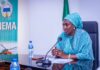
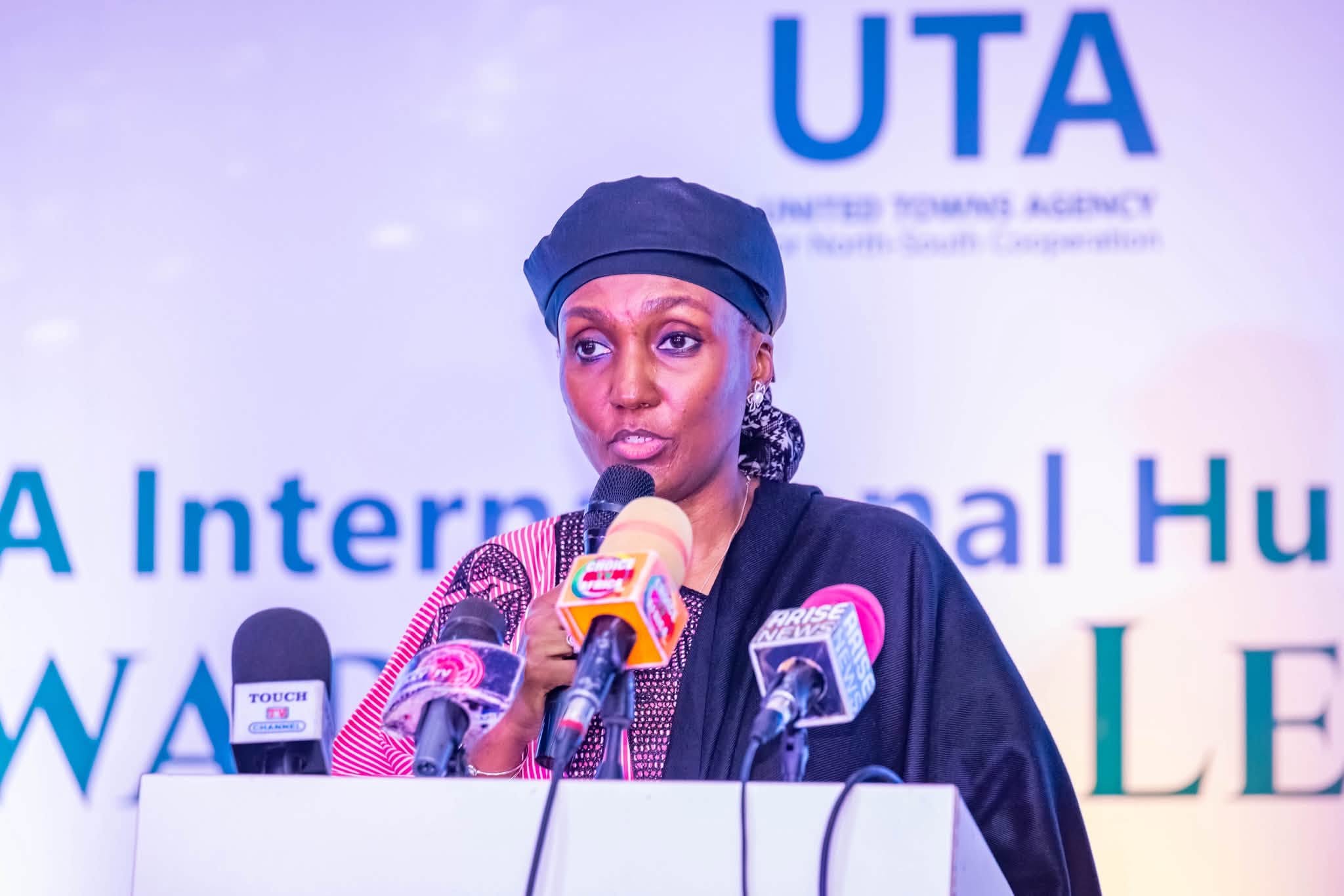
The success of an emergency agency is not always measured by what it does after disaster strikes. Sometimes, it is measured by what it manages to do before the first warning becomes a crisis. That distinction increasingly defines the direction of the National Emergency Management Agency (NEMA) under its Director General, Mrs. Zubaida Umar, whose tenure has placed preparedness, early warning and advance coordination closer to the centre of Nigeria’s disaster management strategy.
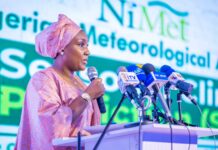
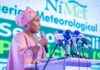
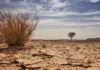
The approach is particularly visible in the handling of flood risks. Following the release of the Seasonal Climate Prediction by the Nigerian Meteorological Agency (NiMet) and the Annual Flood Outlook by the Nigeria Hydrological Services Agency (NIHSA), NEMA developed early-warning messages in three major Nigerian languages and English. The messages were taken closer to communities through State Emergency Management Agencies, Local Emergency Management Committees and traditional institutions, with residents in high-risk areas encouraged to take precautionary measures, including relocation where necessary.
This is also the thinking behind Nigeria’s participation in the Early Warnings for All initiative. NEMA is working with NiMet, NIHSA, the Nigerian Communications Commission, the National Space Research and Development Agency and the United Nations Office for Disaster Risk Reduction to strengthen the country’s ability to detect hazards, communicate warnings and ensure that those warnings reach the people most at risk.
Preparedness, however, is not only about issuing warnings. It requires institutions capable of making sense of information and acting quickly. In August 2026, Umar activated the National Emergency Operations Centre to coordinate flood-related information and other hazards, bringing data, incident reports and response decisions into a central coordination structure. The Agency has also strengthened its use of digital tools for tracking incidents and resources, giving emergency managers a clearer picture of what is happening and where assistance is required.
The same philosophy is behind the simulation exercises being conducted across vulnerable areas. NEMA has carried out a flood simulation exercise in Calabar, Cross River State, and participated in a joint exercise in Adamawa State. Such exercises may appear routine from the outside, but they provide an opportunity to test communication channels, response procedures and inter-agency coordination before lives are actually at stake. Relief supplies, search-and-rescue equipment and mobile water-treatment plants have also been prepositioned in high-risk locations to reduce the time between an emergency and intervention.
Yet preparedness has not meant stepping away from the traditional responsibility of responding when disaster occurs. NEMA has continued to intervene in emergencies ranging from the Alau Dam and Mokwa floods to a school building collapse in Plateau State, tanker explosions in Jigawa, Niger and Enugu, the Dosumu Market fire in Lagos and boat mishaps in different parts of the country. In the Alau Dam and Mokwa incidents, coordinated interventions helped limit the impact despite the difficulties that accompanied the emergencies.
Read Also:
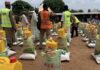
The humanitarian side of the Agency’s work has remained equally significant. Between June and August 2026, NEMA provided assistance to 35,712 households, representing about 214,272 people. It also coordinated the distribution of part of the 42,000 metric tonnes of grains approved by President Bola Ahmed Tinubu, reaching vulnerable populations in states including Sokoto, Niger, Kaduna and Kebbi. In Abuja, the flag-off specifically targeted persons living with disabilities.
Through its partnership with the King Salman Humanitarian Aid and Relief Centre, NEMA distributed 24,302 food baskets to vulnerable households in Benue, Yobe, Kebbi, Anambra and Taraba. Other partners have contributed to the humanitarian effort, including the United Arab Emirates, which donated 50 tonnes of relief materials for flood-affected states, and the Bank of Industry, which donated 20,000 bags of rice to support vulnerable communities in six states.
Behind these interventions is an attempt to strengthen the institution itself. NEMA has begun nationwide consultations towards a National Policy on Relief and Rehabilitation, with World Bank support, while also reviewing the National Disaster Management Framework and National Disaster Response Plan. The aim is to make relief, rehabilitation and recovery more coordinated and predictable rather than dependent on ad hoc responses after each emergency.
The Agency has also invested in personnel and operational capacity through training in incident command, emergency coordination, search and rescue and disaster risk reduction. Three Emergency Response and Ambulance Bays in the Federal Capital Territory have been upgraded as a pilot, while NEMA has continued to build partnerships with security agencies, government institutions, international organisations and humanitarian actors.
Its responsibilities have extended beyond floods and other natural hazards. More than 10,000 Nigerian returnees from countries including Libya, Sudan and South Africa have been received and supported through coordination involving government agencies and humanitarian partners. In January 2026, NEMA commissioned the first phase of the rehabilitation project for communities affected by conflict in Tudun Biri, Kaduna State, with work also progressing in Katsina, Zamfara, Niger, Sokoto and Kebbi states.
The real test of preparedness, however, is not always visible. It can sometimes be found in an emergency that never becomes a catastrophe. In one recent case, NEMA joined other relevant authorities to assess claims of an imminent collapse of the Kagini Dam that had circulated on social media. The assessment found no immediate threat of the kind being alleged, helping to prevent an alarming claim from becoming another emergency in itself.
There are still difficult questions around funding, last-mile communication, state-level coordination and the sheer scale of Nigeria’s exposure to disasters. No emergency agency can eliminate those challenges overnight. But an institution that knows where its weaknesses are and builds systems to address them is better placed to protect lives than one that waits for crisis before beginning to organise.
The measure of Umar’s tenure may ultimately be found not only in the number of relief items distributed after a flood, but in how many communities receive a warning early enough to make a different decision. If a family hears the message, understands the danger and moves before the water arrives, the success may never make the evening news.
That may be the clearest measure of preparedness: not how loudly an agency responds after disaster, but how much it can prevent disaster from becoming a tragedy.
Abdulhamid Abdullahi Aliyu is a journalist and syndicated writer based in Abuja.