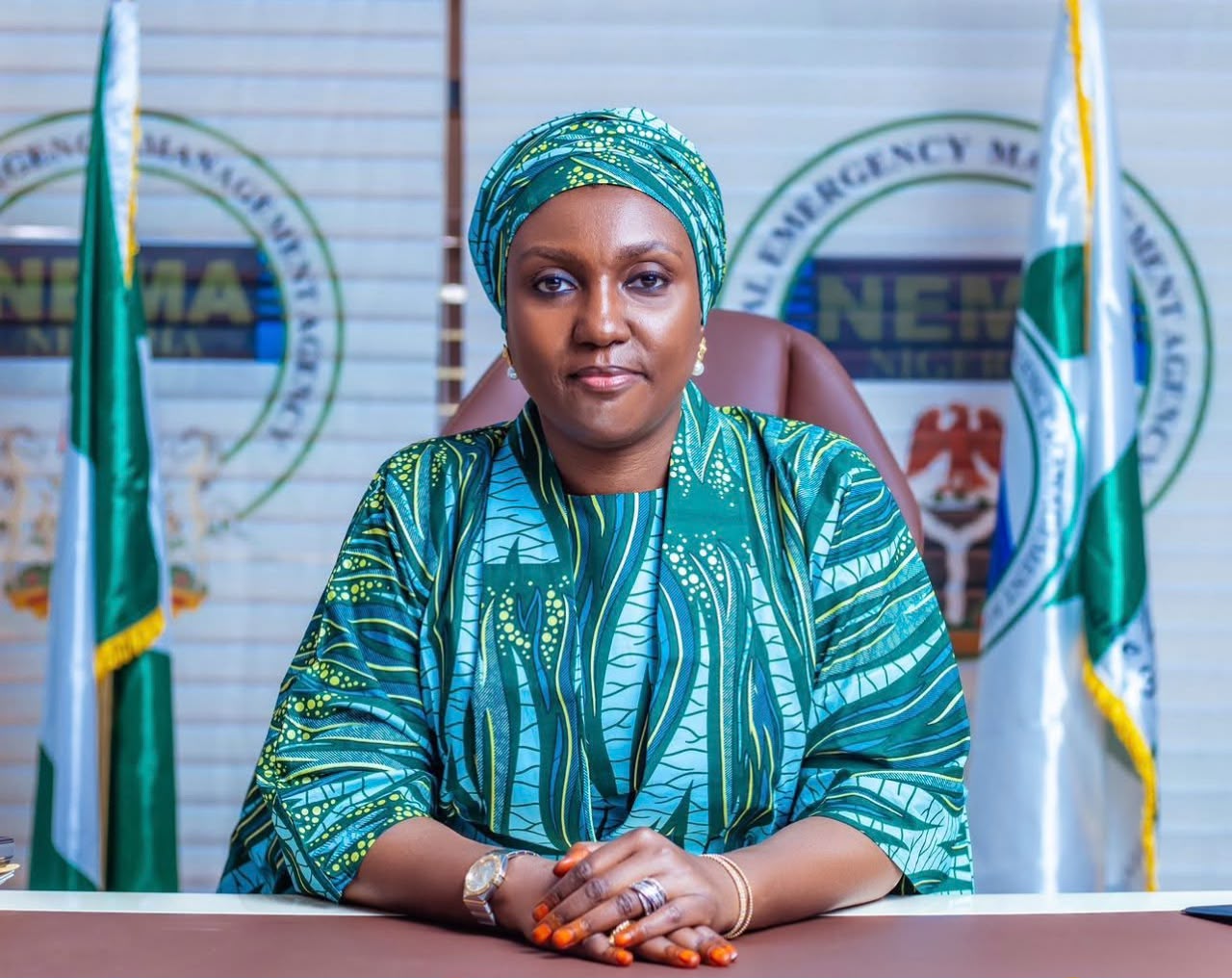
There is a different way of looking at emergency management in Nigeria today. It is no longer enough for an agency to arrive after a flood, fire or building collapse, distribute relief materials and move on to the next emergency. The country’s growing exposure to climate-related hazards, displacement, accidents and other humanitarian crises demands something deeper: institutions that can anticipate danger, prepare communities, coordinate resources and respond with speed when the unexpected happens. It is against this changing reality that the stewardship of Mrs. Zubaida Umar at the National Emergency Management Agency (NEMA) deserves attention.
Since taking charge of the Agency, Zubaida Umar has placed preparedness, coordination and early action more prominently in its operations. The direction is evident in the way NEMA has approached the 2026 flood season, particularly its sustained engagement with State Emergency Management Agencies, Local Emergency Management Committees, traditional institutions and other stakeholders to translate national forecasts into information that communities can understand and act upon. Early warning messages have also been produced in major Nigerian languages and English following the Seasonal Climate Prediction by the Nigerian Meteorological Agency and the Annual Flood Outlook by the Nigeria Hydrological Services Agency.
The importance of such work is easy to underestimate. A flood forecast issued from Abuja has little value to a family in a vulnerable community if the information never reaches them or is not understood. By focusing on the downscaling of warnings and community-level engagement, NEMA is attempting to close the distance between technical information and the people whose lives may depend on it. That approach also explains the Agency’s growing emphasis on simulation exercises, preparedness meetings and inter-agency coordination ahead of anticipated emergencies.
The activation of the National Emergency Operations Centre in August 2026 further strengthened this direction. Under Umar, the Centre has been positioned as a coordination hub for information management and analysis of reliable data on the flood situation and other emergencies. Its purpose is not simply to gather information, but to help decision-makers understand what is happening across the country and determine where intervention is most urgently required. In a field where minutes can determine the difference between containment and escalation, the quality and speed of information can be as important as the equipment available to responders.
The same thinking can be seen in the series of flood simulation exercises conducted in Calabar, Cross River State, and Adamawa State, among other preparedness activities. Such exercises provide an opportunity for emergency agencies and other responders to discover gaps in communication, logistics and coordination before they are confronted by an actual crisis. NEMA has also strengthened cooperation with the Armed Forces, police, NiMet, NIHSA and other government institutions, recognising that no single agency possesses all the resources required to manage a major emergency.
Zubaida Umar’s record is not limited to preparedness. NEMA has continued to respond to emergencies across the country, including the Alau Dam and Mokwa floods, structural collapses, market fires, tanker explosions and boat mishaps. In Lagos, Umar personally engaged with Governor Babajide Sanwo-Olu following the Dosumu Market fire to discuss risk mitigation, while NEMA coordinated search and rescue and assistance in other emergencies. These interventions demonstrate that the emphasis on preparedness has not diminished the Agency’s responsibility to provide immediate assistance when communities are already in distress.
Read Also:
The humanitarian dimension of NEMA’s work has equally remained substantial. From the 42,000 metric tonnes of grains approved by President Bola Ahmed Tinubu for vulnerable Nigerians to the distribution of humanitarian food assistance to 35,712 households, representing more than 214,000 people between June and August 2026, the Agency has continued to provide support to populations facing severe hardship. Its partnership with the King Salman Humanitarian Aid and Relief Centre also resulted in the distribution of 24,302 food baskets across Benue, Yobe, Kebbi, Anambra and Taraba states.
There is another part of the story that receives less public attention: the effort to strengthen the institution itself. NEMA has invested in specialised training covering incident command, search and rescue, disaster risk reduction, climate resilience and emergency coordination, while expanding professional exposure through partnerships with international organisations. The Agency has also worked towards the review of the National Disaster Management Framework and National Disaster Response Plan and commenced consultations for a National Policy on Relief and Rehabilitation, supported by the World Bank. These are structural interventions aimed at making disaster management more coordinated and predictable rather than dependent on improvisation each time an emergency occurs.
The longer-term humanitarian work is equally significant. NEMA has coordinated the reception and support of more than 10,000 Nigerian returnees from countries including Libya, Sudan and South Africa, working with agencies such as the International Organization for Migration, Nigeria Immigration Service and other partners. Under the Rehabilitation Scheme for Persons Impacted by Conflict, the first phase of the Tudun Biri project in Kaduna State was completed and commissioned in January 2026, while construction has progressed in Katsina, Zamfara, Niger, Sokoto and Kebbi states.
What emerges from these interventions is a picture of an agency trying to connect the different stages of disaster management: knowing the risks, warning people, preparing responders, coordinating institutions, intervening during emergencies and supporting communities after the immediate danger has passed. That continuity is important because disaster management is rarely a single event. It is a chain, and weakness at any point in that chain can undermine the entire response.
Zubaida Umar has also expanded NEMA’s engagement with communities and development partners through disaster risk reduction programmes, gender-focused initiatives, Sendai Framework monitoring, climate resilience activities and public awareness campaigns. Her administration has worked with UN agencies, the Red Cross, African Risk Capacity, development partners, civil society organisations and the media, while also deepening engagement with the National Assembly. Such partnerships have become increasingly important as Nigeria confronts risks that cut across institutional and geographical boundaries.
There is, therefore, a broader story behind the individual interventions. Umar’s contribution to NEMA is increasingly associated with an attempt to make emergency management more organised, anticipatory and nationally coordinated. Her approach recognises that relief remains necessary, but relief alone cannot constitute disaster management. A country that repeatedly waits for people to lose homes, livelihoods and loved ones before mobilising resources will always be paying the highest price for preparedness postponed.
The real significance of the changes at NEMA may consequently be found not only in the relief materials delivered or the emergencies attended to, but in the systems being strengthened around them. A functioning early-warning chain, trained responders, prepositioned supplies, reliable data, tested response plans and stronger relationships between institutions can make a decisive difference to ordinary Nigerians who have little control over the hazards confronting them.
For Zubaida Umar, the responsibility is therefore larger than managing an agency. It is about helping Nigeria develop the capacity to face uncertainty with better preparation and a more coordinated response. That task will remain demanding, particularly as climate risks and humanitarian pressures continue to evolve. But the direction under her leadership is clear: NEMA is being encouraged to look beyond the immediate emergency and build the capacity to see, prepare for and manage risks before they overwhelm communities.
That may ultimately prove to be one of the most important measures of her tenure not simply how NEMA responds to disaster, but how much better prepared Nigeria is for the next one.
Abdulhamid Abdullahi Aliyu is a journalist and syndicated writer based in Abuja.